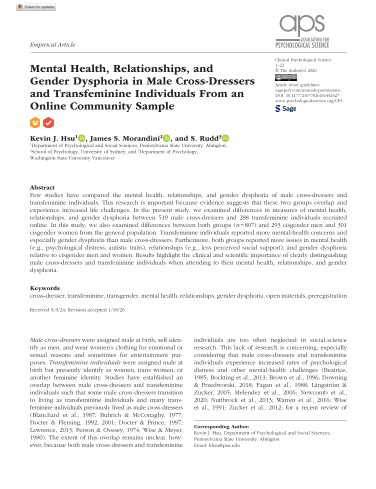
Dr Kevin Hsu, S. Rudd and I have published new research in Clinical Psychological Science examining mental health, relationships and gender dysphoria among male cross-dressers and transfeminine individuals.
These groups overlap, but they are not interchangeable. Both remain insufficiently represented in psychological research—particularly male cross-dressers, whose experiences can sit outside the simplified narratives that dominate public and academic discussion.
A large comparative study
We compared 519 male cross-dressers with 288 transfeminine participants recruited online. We also compared these 807 participants with 293 cisgender men and 301 cisgender women from the general population.
Transfeminine participants reported greater mental-health concerns and, especially, greater gender dysphoria than male cross-dressers. Relative to the general-population comparison groups, both male cross-dressers and transfeminine participants reported more difficulties across aspects of mental health, relationships and gender dysphoria.
Why distinguishing these groups matters
The findings show why researchers and clinicians should distinguish male cross-dressers from transfeminine individuals while also recognising the areas in which their experiences overlap.
Heterosexual and bisexual male cross-dressers are markedly underrepresented in research. Some experience gender dysphoria, shame, secrecy and social stigma, including derision from different sides of contemporary political debates. Their experiences deserve careful empirical attention even when they do not fit readily accepted narratives.
Rigorous sexuality and gender research must remain willing to study people as they actually are. Better evidence can help clinicians, partners and communities respond to the distinct needs of these populations with greater precision and empathy.
Read the paper in Clinical Psychological Science or view my original LinkedIn post.